Shopify e-commerce development services covers everything from initial store setup and theme customisation to custom app development, platform migration, and ongoing optimisation. UK e-commerce businesses should evaluate Shopify partners based on their technical depth, migration track record, and ability to protect data integrity across products, customers, and orders.
Picking the right Shopify development partner can feel like choosing a contractor to renovate your house—everyone claims to be an expert, but the proof is in the finished product (and whether your pipes still work afterwards).
For UK e-commerce owners and marketing managers planning Shopify work in 2026, the stakes are high. Get it right, and you unlock a scalable, integrated platform that grows with your business. Get it wrong, and you risk lost data, broken integrations, and a store that looks great on paper but underperforms in practice.
This guide breaks down the core Shopify e-commerce development services available, explains when each one is needed, and outlines exactly what to look for when evaluating a development partner—particularly around data integrity.
What Do Shopify Ecommerce Development Services Actually Cover?
Shopify development is not a single service—it's a spectrum. Understanding where your project sits on that spectrum is the first step to finding the right partner.
Here are the five core service categories most UK Shopify agencies offer:
1. Shopify Store Setup and New Build
This covers building a Shopify store from scratch: configuring your store settings, connecting your payment gateway, setting up shipping zones (including UK-specific options like Royal Mail and DPD integrations), and launching with a functional, branded storefront.
New builds are ideal for businesses launching on Shopify for the first time or those spinning up a dedicated D2C channel alongside existing wholesale operations.
2. Shopify Theme Customisation
Shopify's theme library is a solid starting point, but out-of-the-box themes rarely reflect a brand's full identity or conversion goals. Shopify theme customisation involves modifying existing themes—or building bespoke ones using Shopify's Liquid templating language—to deliver a tailored user experience.
This might include custom product page layouts, bespoke navigation structures, or checkout enhancements. For Shopify Plus merchants, Checkout Extensibility opens even more room to customise the purchase flow without touching the core checkout code.
3. Shopify App Development
When Shopify's native features and the App Store don't quite cover your requirements, custom Shopify app development fills the gap. This is common for businesses that need:
- Bespoke pricing logic (e.g., trade vs. retail pricing for B2B customers)
- Custom integrations with ERP systems like SAP or Sage
- Proprietary loyalty or subscription mechanics
Custom apps built via Shopify's API can also connect your store to CRM platforms like HubSpot or accounting tools like QuickBooks—seamlessly integrating systems that your team already relies on.
4. Shopify Store Migration
Moving to Shopify from WooCommerce, Magento, BigCommerce, or another platform is one of the most technically demanding services in the ecosystem. A migration involves transferring your product catalogue, customer records, order history, URLs, and SEO metadata—without losing any of it in transit. Even moving from Shopify Basic/Advanced to Shopify Plus presents data integrity challenges that must be considered and catered for.
Data integrity is the defining challenge here. A poorly executed migration can corrupt customer records, break historical order data, or tank your search rankings overnight. More on evaluating this below.
5. Shopify Optimisation and Maintenance
Launching is just the beginning. Ongoing Shopify optimisation and maintenance services keep your store performing well as your catalogue grows, your traffic scales, and Shopify's platform evolves.
This includes Core Web Vitals improvements, conversion rate optimisation (CRO), A/B testing, app stack audits, and platform updates. For high-growth businesses, this is often the service that delivers the most measurable return over time.
When Do You Need Each Service?
Not every business needs the full suite. Here's a quick decision framework:
Situation and Recommended Service
-
Starting fresh on Shopify = Store setup and new build
-
Your theme feels generic or isn't converting = Theme customisation
-
You need functionality the App Store doesn't offer = Custom app development
-
Moving from WooCommerce, Magento, or another platform = Store migration
-
Store is live but performance has plateaued = Optimisation and maintenance
As an example, if you're migrating from WooCommerce—still one of the most common transitions for UK retailers—expect the project to touch all five categories to some degree.
How to Evaluate a Shopify Development Partner in the UK
The UK Shopify agency market has matured considerably. There are excellent partners out there, but there are also generalist web agencies that list "Shopify development" as a service without the depth to back it up. Here's what to look for.
Do They Have a Proven Migration Track Record?
Ask specifically about migrations from your current platform. A credible agency should be able to walk you through their migration methodology, the tools they use (such as Matrixify or LitExtension), and how they validate data post-migration.
Red flags include vague answers about data transfer, no staging environment in the process, or an inability to explain how they handle SKU mapping, customer password migration, or 301 redirect strategies for SEO preservation.
How Do They Protect Data Integrity?
This is the big one. A migration that drops order history makes post-purchase analytics unreliable. One that corrupts customer records damages your email marketing lists and loyalty programmes. Across products, customers, and orders, you should expect:
- Pre-migration data audit: The agency should review and clean your existing data before transfer, not after.
- Staged migration with QA: A full test migration on a staging environment, followed by structured quality assurance before go-live.
- Reconciliation report: A post-migration report confirming record counts match between the old platform and Shopify.
Any agency that skips these steps is cutting corners that will cost you later.
Can They Integrate With Your Existing Tech Stack?
Shopify doesn't operate in isolation. For most medium and larger UK businesses, it needs to connect with an ERP system, a CRM, a warehouse management system, or all three. Ask prospective partners for specific examples of integrations they've built or maintained—and verify those examples with references where possible.
What Does Shopify Development Cost in the UK?
Pricing varies significantly based on project scope, agency size, and complexity. As a rough guide for 2026:
- Basic store setup: £2,000–£6,000
- Theme customisation: £3,000–£15,000+
- Custom app development: £5,000–£30,000+
- Platform migration: £4,000–£25,000+
- Ongoing optimisation retainer: £1,000–£5,000/month
These are indicative ranges. A complex WooCommerce migration with tens of thousands of SKUs and years of order history will sit at the higher end. A straightforward new store build on a premium theme will sit at the lower end.
Making the Right Call for Your Shopify Project
The Shopify ecosystem gives UK e-commerce businesses a genuinely powerful platform to build on—but the quality of your development partner determines how much of that power you actually unlock.
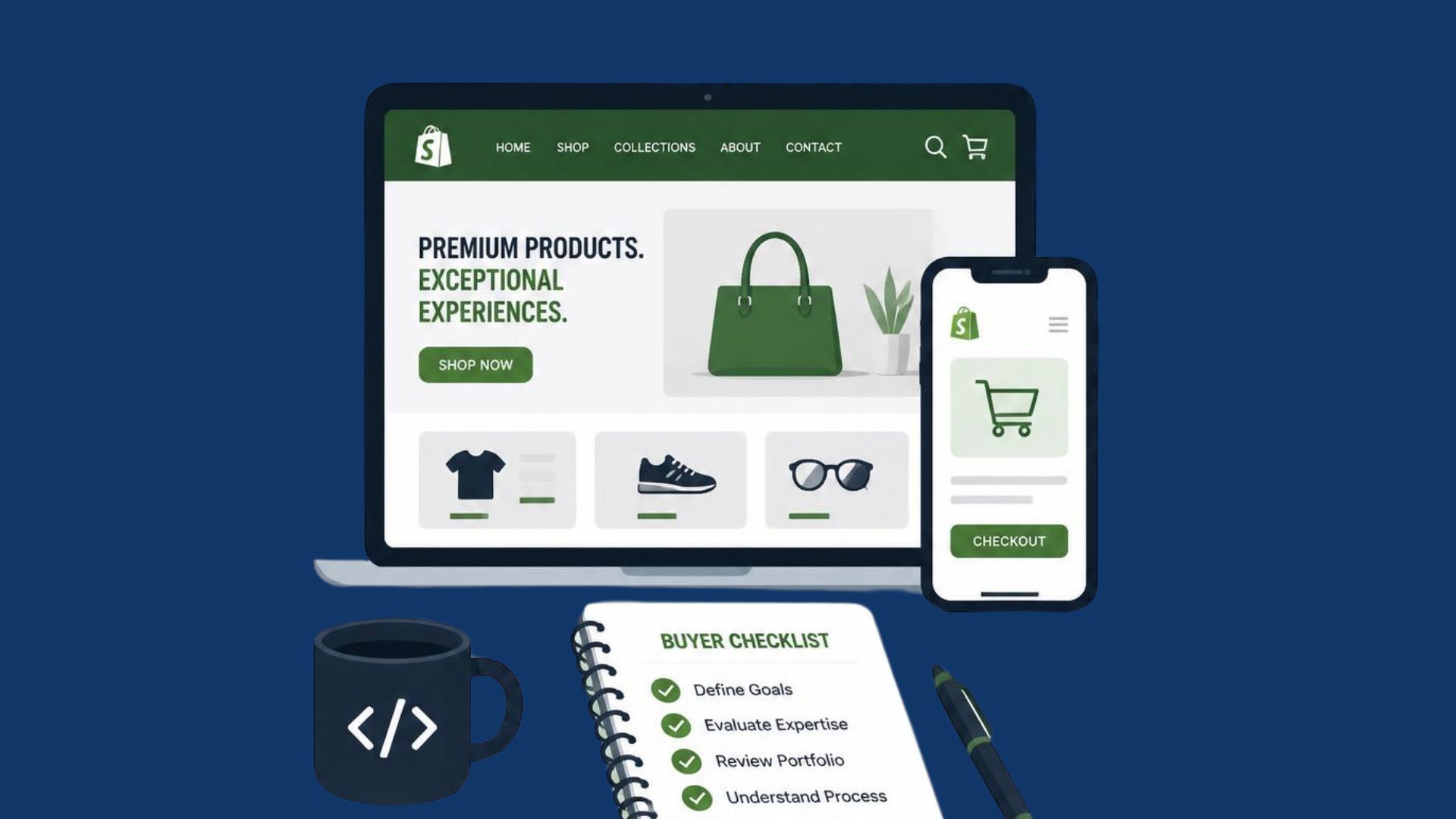
Define your requirements clearly before approaching agencies. Know whether you need a new build, a migration, customisation, or ongoing support. Prioritise partners who ask detailed questions about your data, your integrations, and your long-term growth plans—because those questions signal the right kind of thinking.
And if a partner can't clearly explain how they'll protect your product, customer, and order data during a migration? Keep looking.
Frequently Asked Questions
What are Shopify ecommerce development services?
Shopify ecommerce development services include store setup, theme customisation, custom app development, platform migration, and ongoing optimisation. Agencies offering these services help businesses build, launch, and scale Shopify stores tailored to their specific commercial and technical requirements.
How long does a Shopify store migration take?
A straightforward migration from WooCommerce or Magento to Shopify typically takes four to twelve weeks, depending on catalogue size, data complexity, and the number of integrations involved. Migrations requiring custom app development or significant SEO work will take longer.
What is the difference between Shopify and Shopify Plus for UK businesses?
Shopify Plus is Shopify's enterprise tier, designed for high-volume merchants and B2B sellers. Key differences include access to Checkout Extensibility, higher API rate limits, dedicated account management, and B2B-native features such as company accounts and custom pricing. UK businesses turning over £1M+ annually or managing wholesale alongside retail typically benefit from Shopify Plus. Shopify Plus also allows you to operate a B2B and DTC (B2C) website from a single platform.
How do I find a reputable Shopify developer in the UK?
If you are reading this, you found us already but otherwise look for case studies from businesses of a similar size and sector, check for transparency around their migration and QA process, and request references from previous clients before committing.
Can a Shopify developer integrate my store with my ERP or CRM?
Yes. Experienced Shopify developers can build custom integrations connecting your store to ERP systems (such as Sage, SAP, or NetSuite), CRM platforms (such as HubSpot or Salesforce), and accounting tools (such as QuickBooks or Xero). The complexity—and cost—of the integration depends on how much customisation the data exchange requires.
So What's NEXT?
Get in touch with our team today and start selling better, online, sooner with a Shopify or Shopify Plus solution.